
Full-Day Rockport Inshore Charter: Cover More Water, Find More Patterns
A full-day trip is for anglers who want more than one quick stop. With about 8 hours on the water, you can cover more ground, test more water types, and give the bite time to change.
Rockport sits in an estuary, where fresh water mixes with salt water, and conditions can shift with wind and water level (U.S. EPA). If you’ve been searching for Rockport fishing inshore and want to level up, a full-day is the “let’s figure it out and stay on it” option.
What a full-day adds (and why it matters)
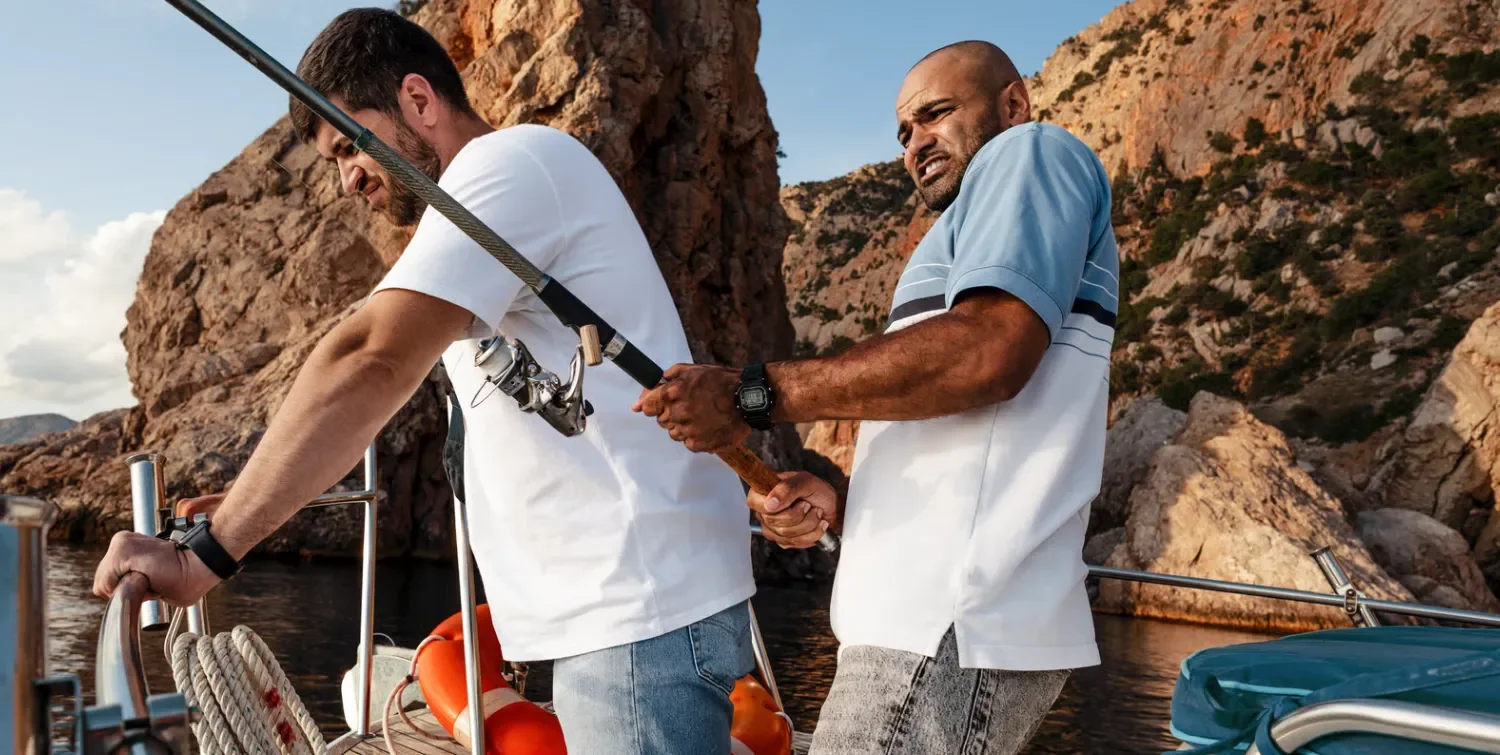
A full-day does three big things that are hard to squeeze into a shorter trip:
More zones: You can fish more than one habitat without feeling rushed.
More tide windows: You can be in the right place when water movement turns on.
More pattern time: If the first plan is slow, you have time to adjust and still finish strong.
In Rockport’s Mission-Aransas system, the bays are large and shallow and include wind tidal flats, seagrass meadows, and oyster reefs (UT Marine Science). That variety is a big reason a full-day can pay off. More habitat options means more ways to stay around fish.
The 8-hour full-day flow
This is a simple way to picture the pacing. Exact timing changes by day, but the rhythm stays about the same.
| Time block | What you do | Why it works |
|---|---|---|
| Block 1: Start | Begin in a high-percentage area | Quick bites build confidence and set the tone |
| Block 2: Scout | Try a second look if needed | You learn what the fish want today |
| Block 3: Lock in | Spend time where the bite repeats | You turn “random bites” into a pattern |
| Block 4: Best window | Ride the strongest water movement | You fish the peak instead of guessing |
| Block 5: Finish | Make a final move or two if needed | Last push without rushing back |
“Pattern” just means this: the same type of spot keeps producing. It could be fish on grass edges, fish on a drop, or fish near moving water. A full-day gives you the time to find that repeat.
Where you can fish on a full-day in Rockport
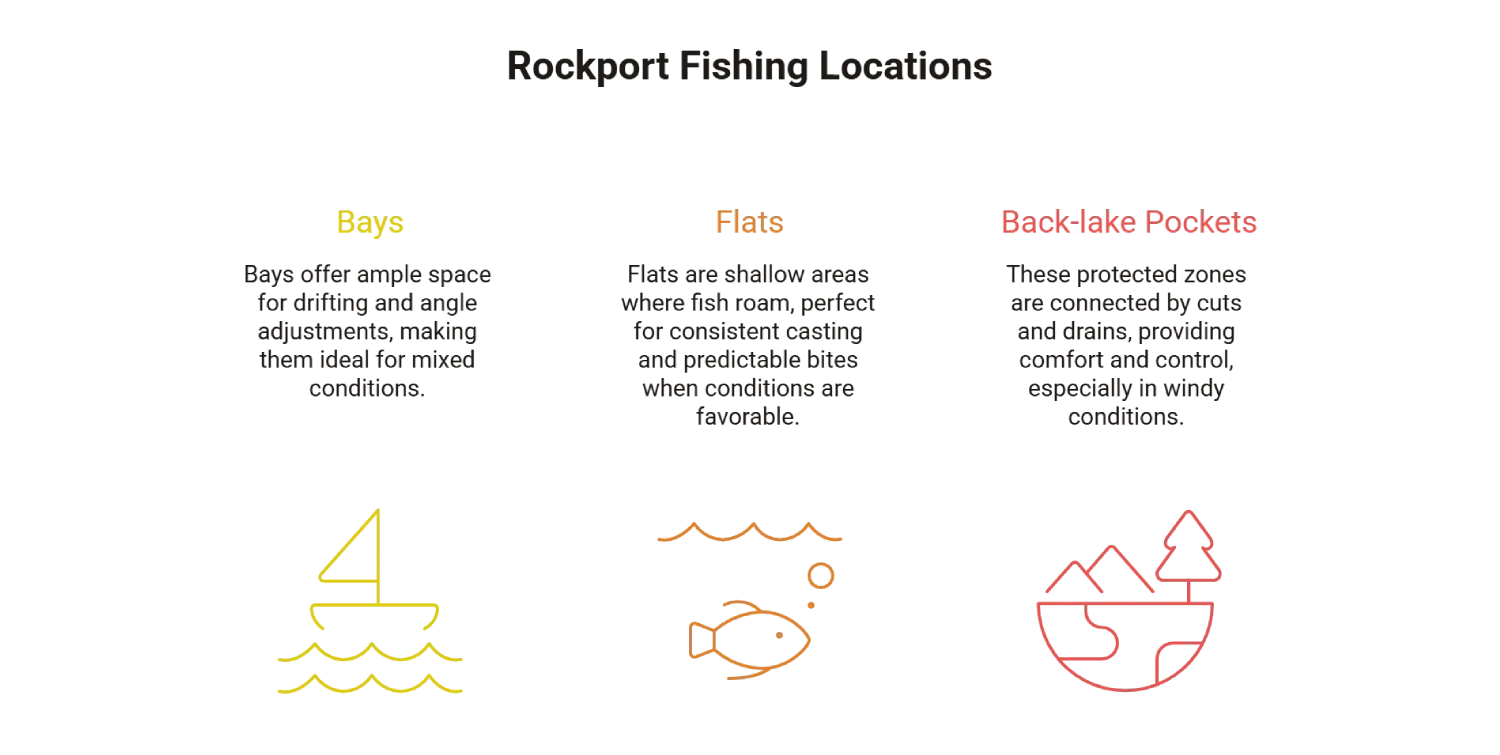
When someone says “locations,” they usually mean the type of water, not an exact GPS point. On a full-day, you can mix and match based on conditions.
Bays
Bays give you room to drift and change angles. They are a solid choice when conditions are mixed because you can bounce between shorelines, edges, and deeper lanes without long runs.
Flats
Flats are shallow water where fish cruise. When the wind and clarity cooperate, flats can be great for steady casting and clean, repeatable bites.
Back-lake style pockets
These are smaller, more protected zones connected by cuts and drains. They can be the best option when wind is up or when you want comfort and control. A full-day gives you time to check them, then move if the bite is not there.
Tide windows: why full-days often win
On many full-days, the plan is built around water level and timing. NOAA’s Rockport tide predictions show when the water is rising or falling, and those swings can help bait move and fish set up in predictable lanes (NOAA Tides & Currents).
On a shorter trip, you might fish whatever window you get. On a full-day, you can fish early, then come back to a spot when the water is doing what you want.
The quick decisions that keep you on bites

A full-day is not about running all day. It is about moving with a reason.
Wind: comfort and control
Wind affects the ride and how well the boat can drift. Marine forecasts are a big part of the call, especially when conditions build through the day (National Weather Service).
Clarity and bait
Clear water can open up shallow options. Off-color water can make edges and moving water more important. Your captain is watching for bait flicks, birds, and other signs that fish are close.
When to stay vs when to move
A simple rule:
Stay when you see repeat signs and the bite keeps happening.
Move when the signs disappear and the same approach stops working.
A full-day gives you time to test one idea, change one variable (depth, shoreline, current), and find the version that works.
Targets: what you can expect to catch
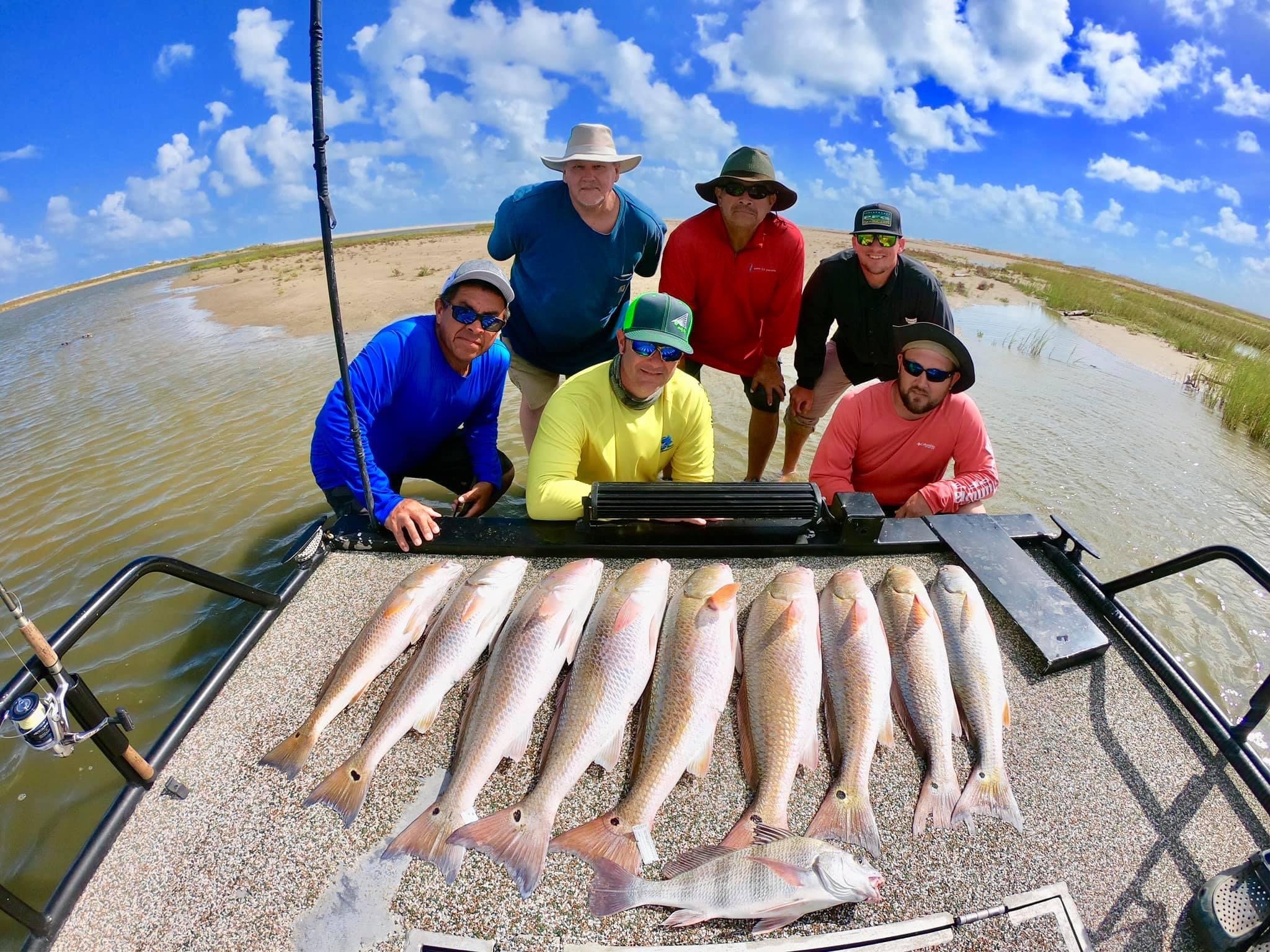
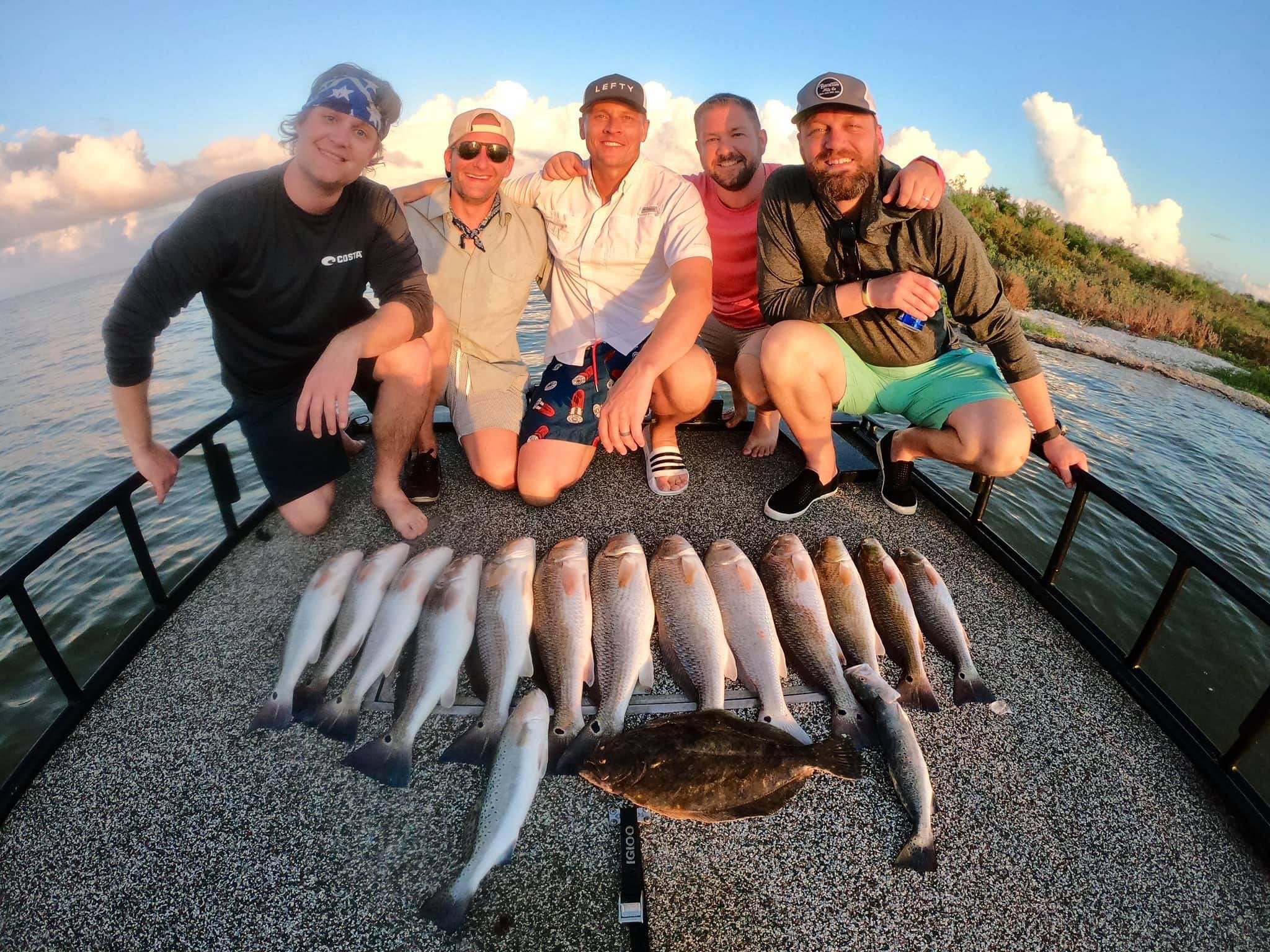
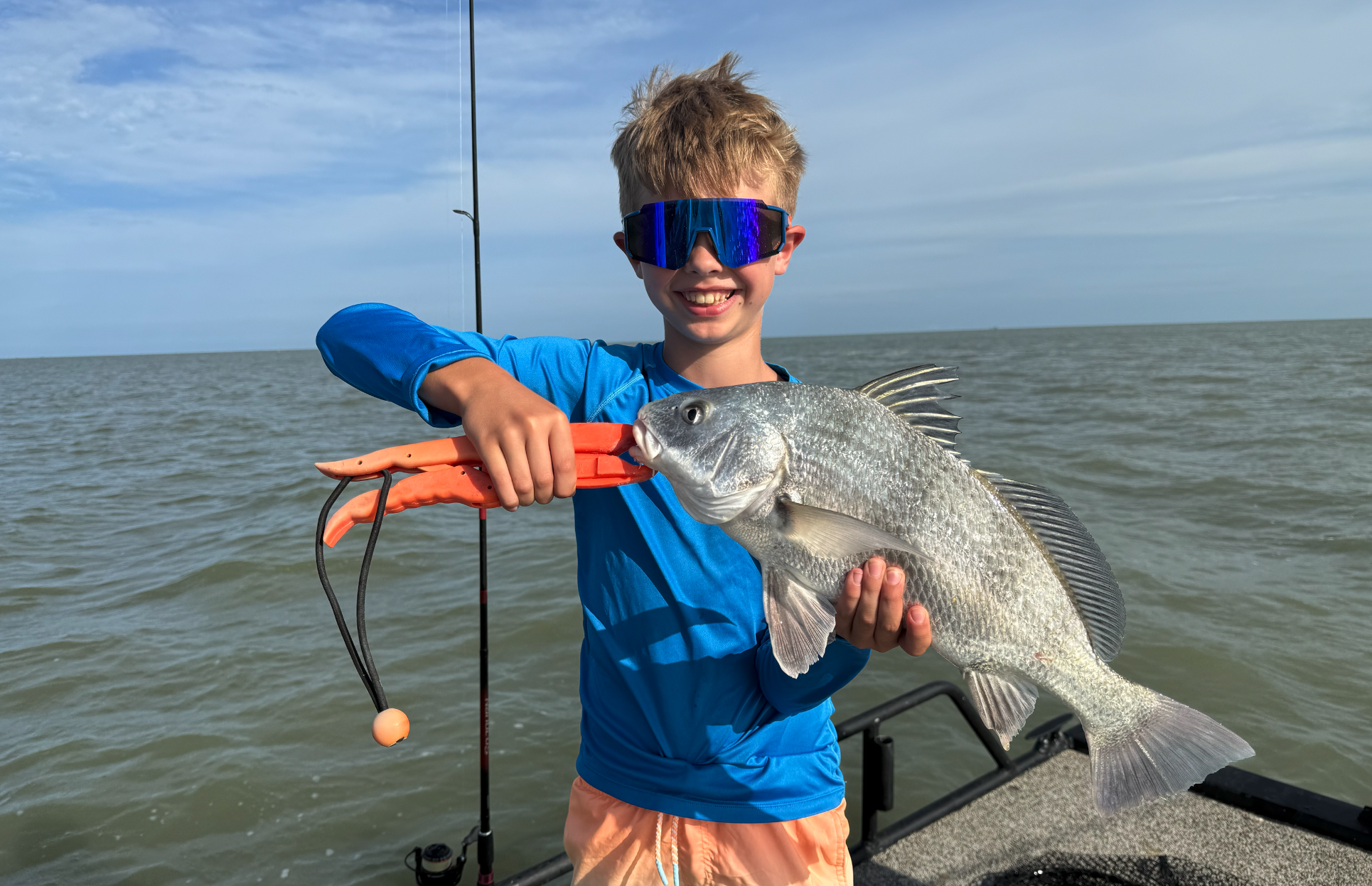
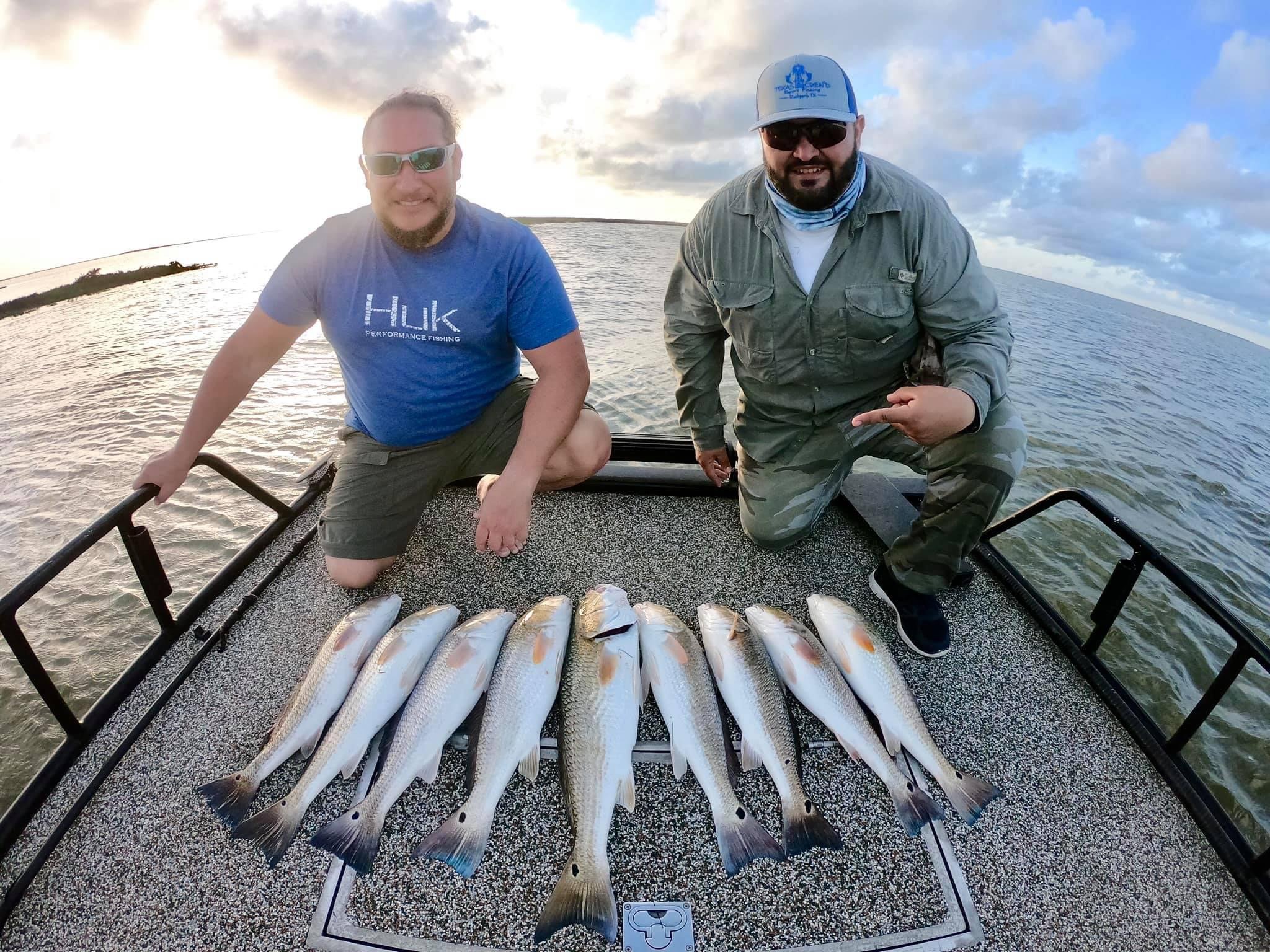
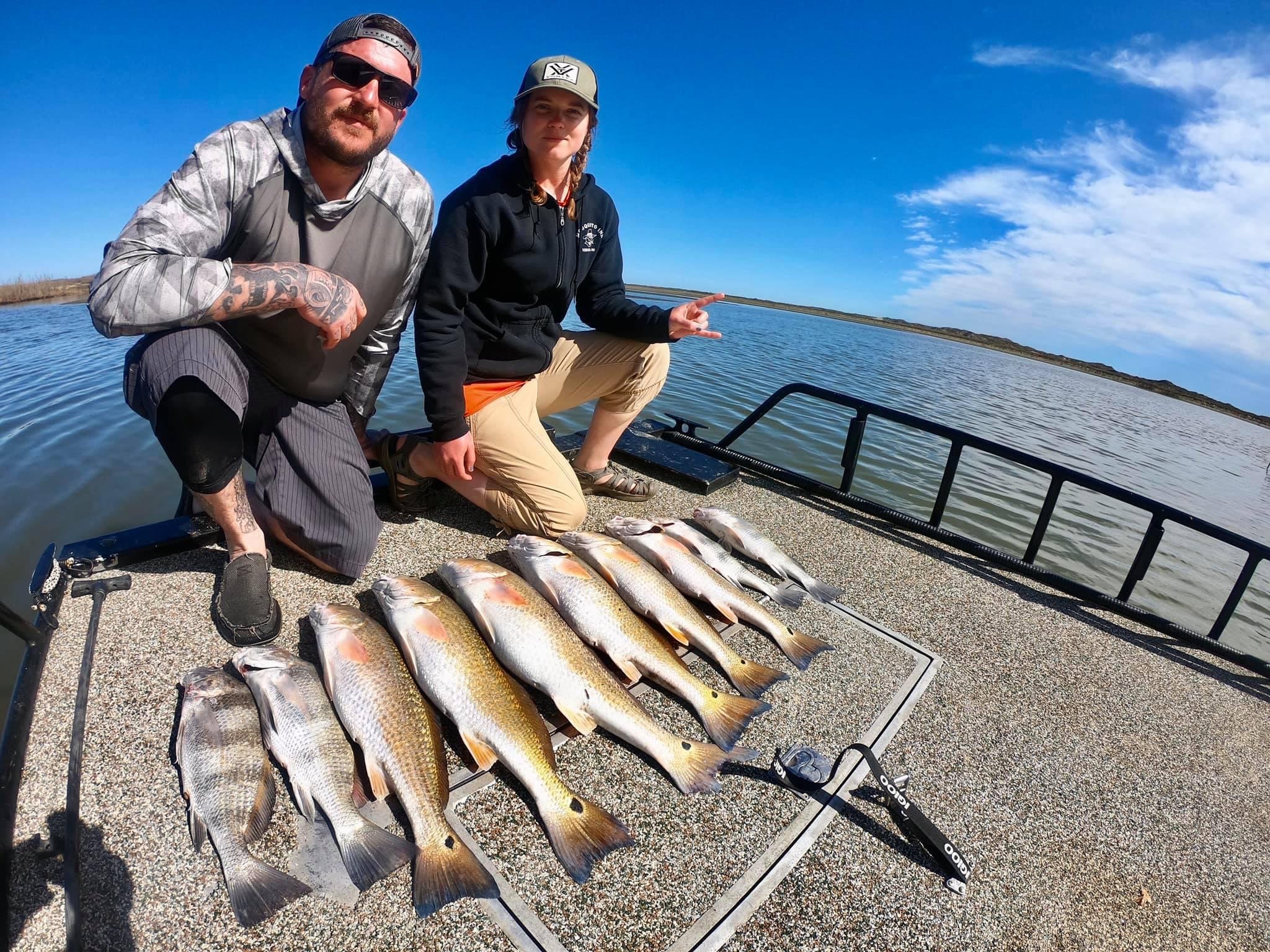
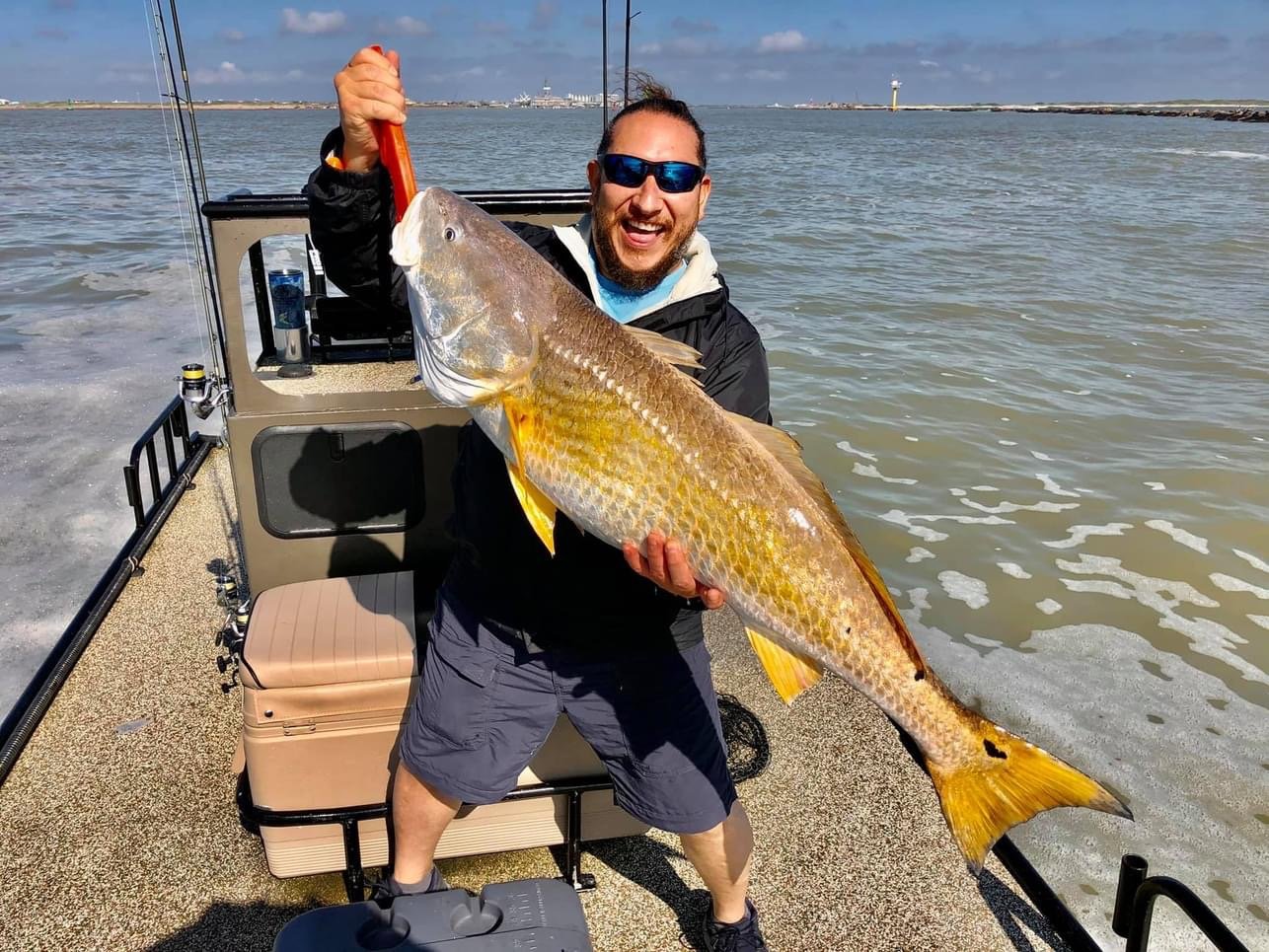
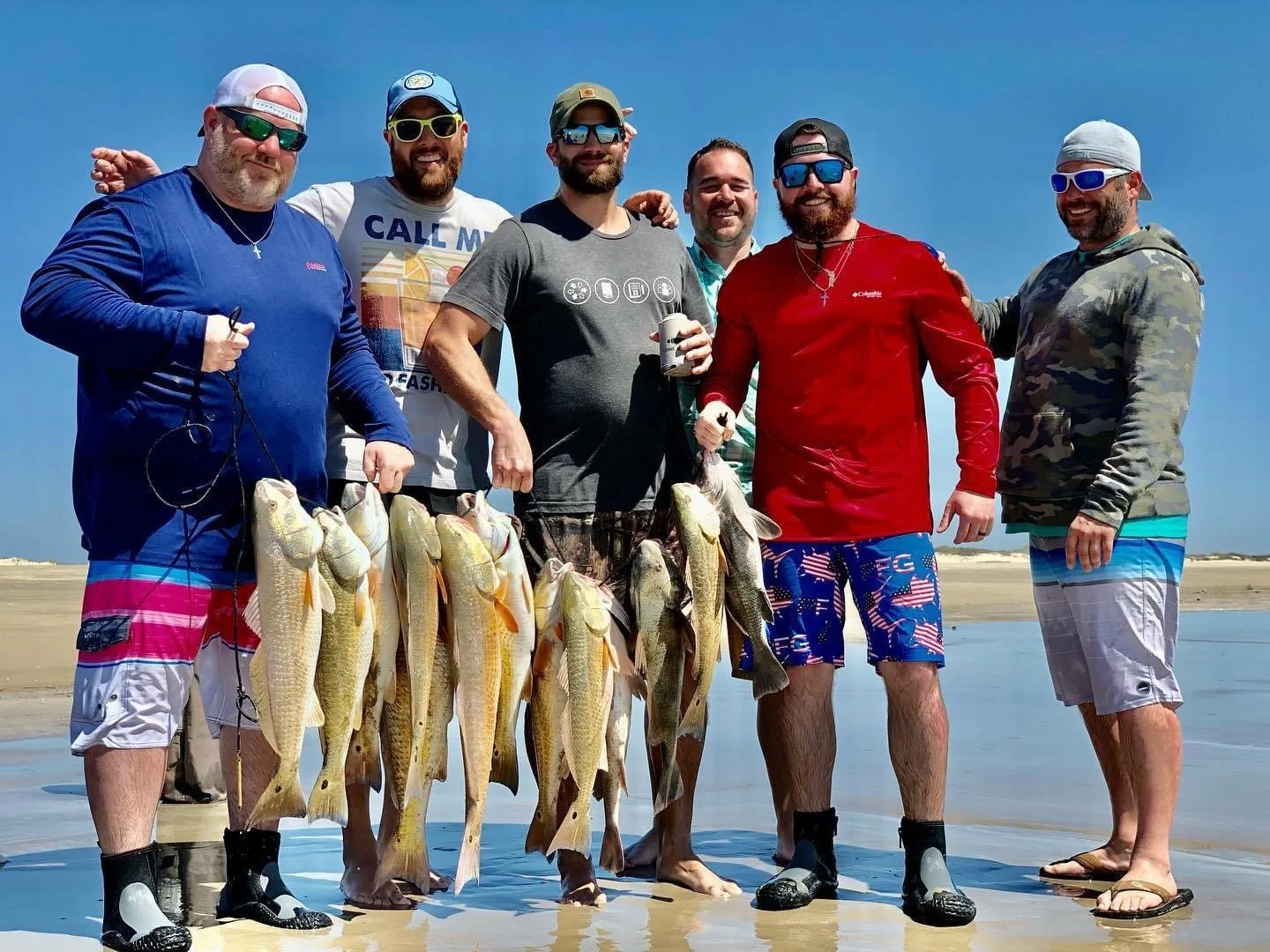
On a full-day Rockport inshore trip, the core targets usually include red drum, black drum, trout, and flounder. A full-day also gives you more time to run into bonus species that live in Texas bay systems.
Texas Parks and Wildlife’s coastal bay animals guide shows common species found in Texas bays, including red drum, spotted seatrout, and black drum, with plenty of other bay fish listed as well (Texas Parks & Wildlife).
Techniques you can expect (kept simple)
You do not need advanced skills to fish a full-day. The main difference is you have more time to learn and improve.
Drifting and fan casting: Cover water and find active fish.
Working shorelines and edges: Fish like “lines” where depth or bottom changes.
Slowing down when you find them: When bites repeat, you work that zone longer.
If wading is on the table, it is optional and group-dependent. The goal is always comfort first, then bites.
When a full-day is worth it
A full-day is a smart pick if you want to:
Fish more than one zone without rushing
Hit the best tide window instead of hoping you land on it
Learn more in one trip (because you see more situations)
A shorter trip can still be great if you only want a quick, simple outing with fewer moves.
What to bring
Texas Crew’d keeps it turnkey. Their guidance is simple: bring basics like sunscreen and snacks/drinks, and the charter provides fishing gear plus water and ice.
Quick list:
Sunscreen, hat, polarized sunglasses
Drinks and snacks
Light layer
Shoes you do not mind getting wet
Learn more about the Rockport inshore trip options here: Texas Crewd Rockport inshore



Ready to plan your full-day?
For a simple plan for your crew, contact us today!
When you message us, tell us your group size, your comfort level, and what you want most out of the day (steady action, learning, or a shot at bigger bites). We will recommend a full-day game plan based on the wind, water level, and what is most fishable that day.
FAQ: Full-day Rockport inshore charters
-
A full-day gives you time to fish multiple zones and wait for a better window if the bite is slow early. It also gives you more time to find a repeatable pattern instead of relying on one short stop.
-
It should mean more fishing. The best full-days are built around short, smart moves and longer time in water that is producing.
-
The usual targets include red drum, black drum, trout, and flounder. With more time, you can also run into other common bay species while staying focused on the main plan.
-
It means the same type of spot keeps producing bites. A full-day gives your captain time to test a couple of looks, then spend more time where the bite repeats.
-
Bring sunscreen and snacks/drinks, plus any meds you normally take for being on the water. Texas Crew’d typically provides the fishing gear, along with water and ice.