
Aransas Bay Tide Guide: How Tides Change the Bite
If you’re planning Rockport fishing inshore, this tide guide will help you understand how water movement in Aransas Bay changes depth, current, and where fish set up.
QUICK ANSWER

Tides change two things that matter to your bite: depth and movement. Tides are driven mainly by the Moon’s gravity, which shifts ocean water and makes levels rise and fall. NASA’s tide overview covers the basics. In Aransas Bay, that rise and fall creates flow through flats, guts, and cuts. Moving water pushes bait into lanes and sets up the bite.
Tide basics without the headache
High tide vs. low tide (depth)
High tide puts more water on the flats. Low tide pulls water off and makes some areas skinny. That depth change tells fish where they can roam and where they have to slide to the nearest edge.
Simple rule:
Higher water: more shallow options.
Lower water: more funneling to edges.
Incoming vs. outgoing (movement)
Incoming tide is water pushing in. Outgoing tide is water draining out. Either can be good. What you want is moving water plus a place fish can hold.
Feeding lanes in plain terms
A feeding lane is a spot where fish can hold steady while food moves past. Lanes form on edges and at pinch points. Line up your cast so your lure crosses the lane, then stays in it.
| Tide stage | Start here | Best cast angle |
|---|---|---|
| Incoming | Shoreline edge or first drop | Cast parallel, then cut across the seam |
| Outgoing | Drain mouth or channel edge | Cast up-current and swing through |
Where current forms in Aransas Bay

“Tide” is the rise and fall. “Current” is the flow that happens because of it. Current gets stronger where the bay forces water through a tighter path.
Look for:
drains off a flat
channel edges
points and corners
seams where fast and slow water meet
For a simple explanation of tides and currents together, the Smithsonian’s tides and currents guide keeps it clear.
The best lane is often beside the hardest push
Fish often sit in calmer water next to fast flow and let food come to them. Rip lines, swirls, and nervous bait are good signs.
Incoming tide game plan (simple)
What changes
Incoming water floods more shoreline and cover. Fish can slide up shallow.
Where to fish
flooded shoreline edges
the first drop right off a flat
pockets that collect bait
What to throw
soft plastics on light jigheads
suspending baits with pauses
Outgoing tide game plan (simple)
What changes
Outgoing water pulls bait off the flats and points it toward deeper water.
Where to fish
drains leaving the flats
mouths of small guts
channel edges near the exit route
What to throw
paddletails that track straight
slightly heavier jigheads
Tip: cast up-current and let the lure swing through the seam. If it feels too fast, go slightly heavier and slow your retrieve.
How to use a tide chart for Aransas Bay (NOAA method)
Do these three checks before you pick a spot:
Direction: incoming or outgoing?
Moving window: plan around steady movement, not only the exact high or low.
Wind: wind can raise or lower water level compared to the prediction by pushing water in its direction. The Bureau of Meteorology’s wind effect explainer calls this wind setup.
For a local reference, use NOAA Station 8775241 (Aransas, Aransas Pass) to line up higher, lower, and changing water.
Safety and Texas rules (quick)
Low tide can leave flats too shallow fast. Watch depth.
Current near cuts can make boat control tricky. Give yourself room.
Texas requires a current fishing license for most people fishing public waters. Details and exceptions are listed by Texas Parks and Wildlife.

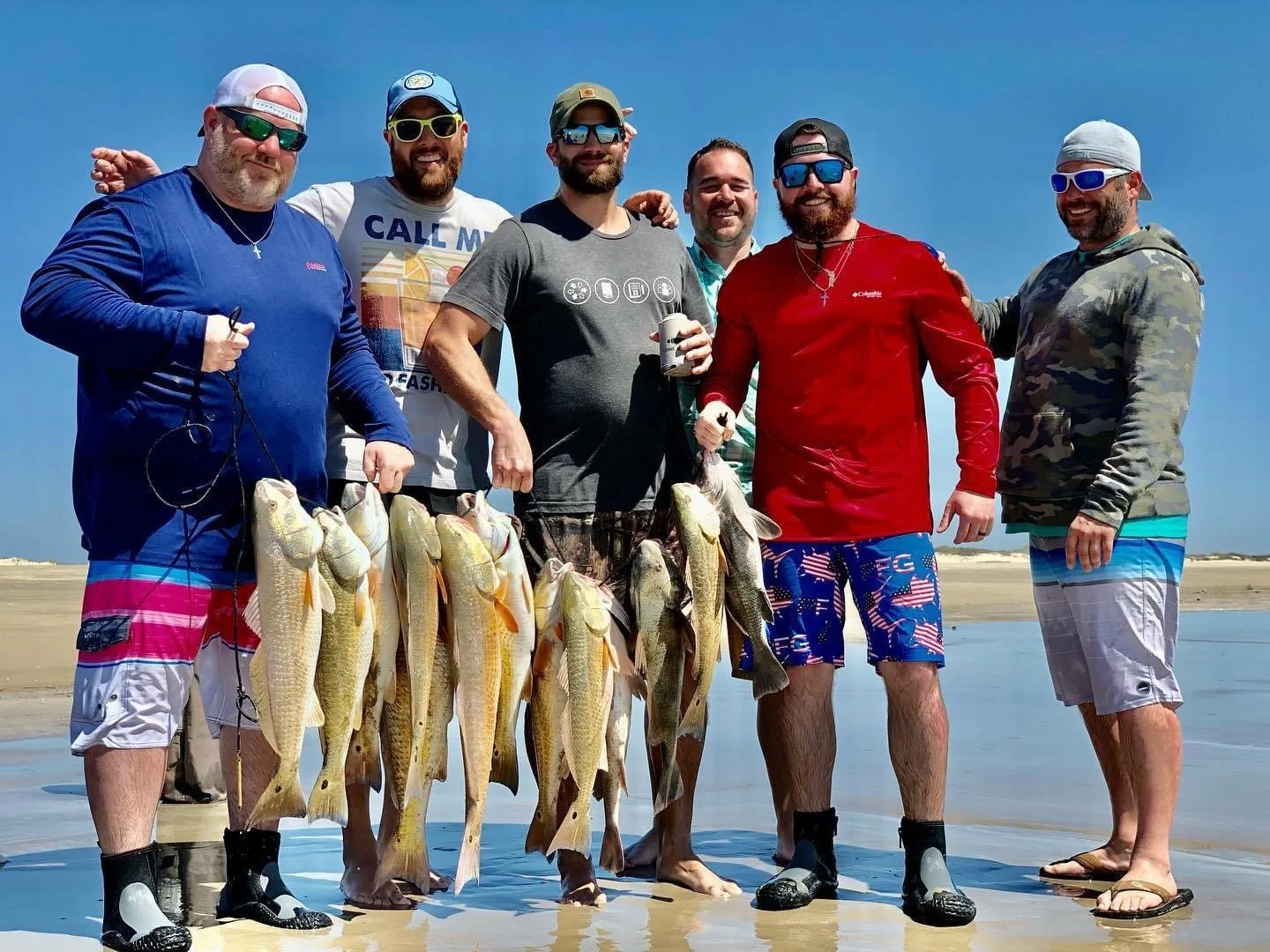


Ready to fish Aransas Bay the easy way?
Texas Crew’d runs guided bay trips for first-time charter guests and anglers who want to level up. You bring sunscreen and snacks. We bring the gear, bait, water, and ice, and we keep the plan simple.
Tell us your dates and group size and we will help you pick tide windows that fit your trip. Contact us today!
Frequently Asked Questions
-
Redfish can feed on incoming or outgoing tides. The easy move is to fish when water is moving and pick a lane, like a shoreline edge on incoming or a drain on outgoing.
-
No. Incoming can turn shallow edges on, and outgoing can line fish up on drains and channel edges. Movement plus a good holding spot beats direction.
-
Slow down and get tighter. Fish the first drop or a channel edge, work your lure longer in one lane, and add pauses.
-
In most cases, yes. We can help you understand what applies to your trip, and Texas Parks and Wildlife lists current license types and common exceptions.
-
Bring sunscreen, sunglasses, a hat, and any snacks or drinks you want. We typically provide the fishing gear, plus water and ice, so your day stays easy.